
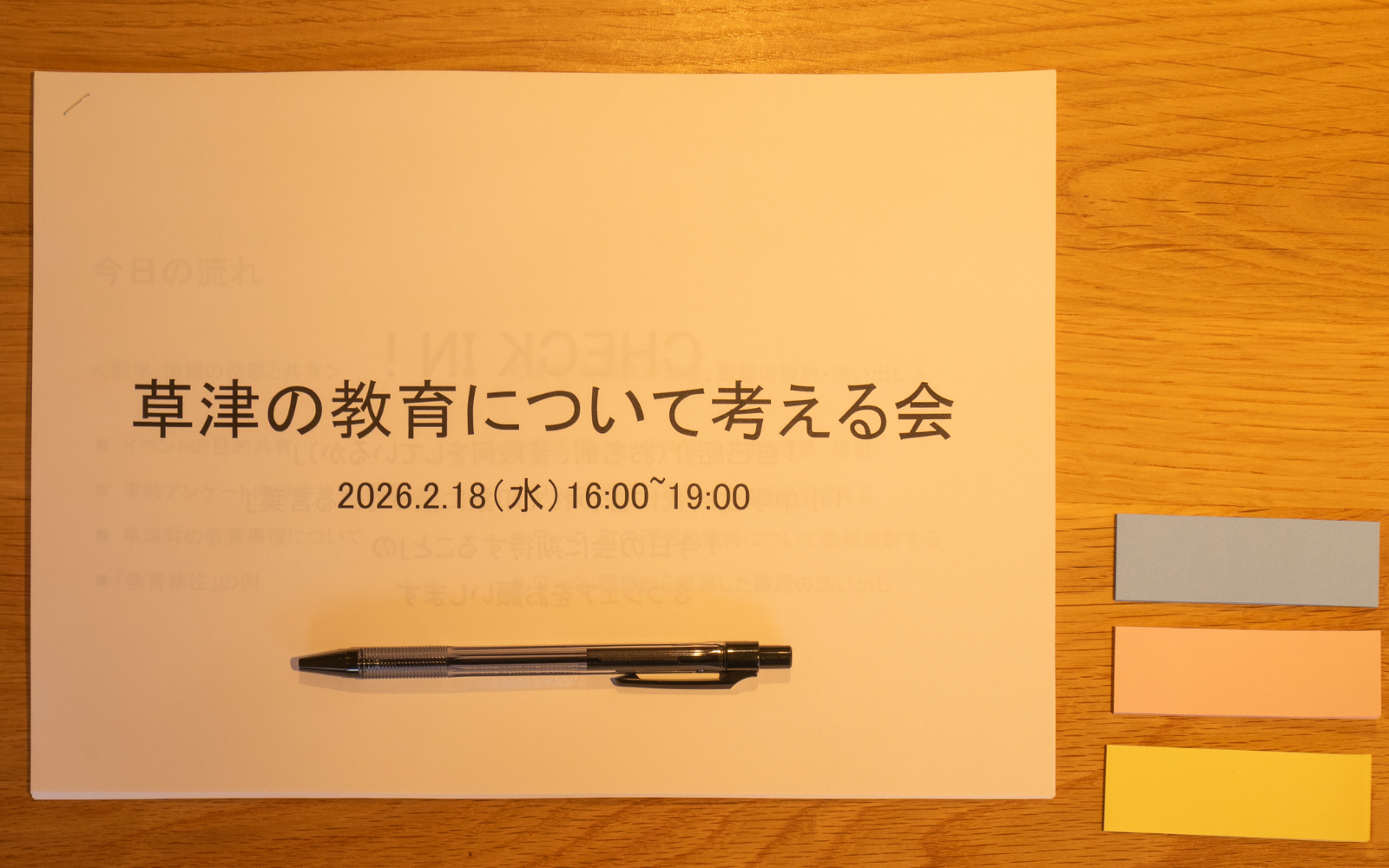
On February 18, 2026, we held a discussion event at the coworking space to think about education in Kusatsu.
In Kusatsu, there is only one elementary school and one junior high school, and students must go down the mountain to another municipality to attend high school. This creates unique geographical challenges for education in the town.
In addition, tourism is the town’s main industry, and many parents work late into the evening. However, childcare support systems are limited, and there are no cram schools in town, leaving families unsure how to prepare their children for entrance exams. We have heard many concerns like these from local residents.
For this event, we wanted to create a space where residents could share their concerns about education and reflect on what ideal education in Kusatsu might look like. By doing so, we hoped to uncover challenges that had not yet surfaced and explore new ideas for the future, as well as ways the coworking space might contribute to solving these issues.
Together with the seven participants who joined us on the day, as well as many local residents who shared their thoughts through a pre-event survey, we spent time thinking about the future of Kusatsu. Here is a look back at that discussion.
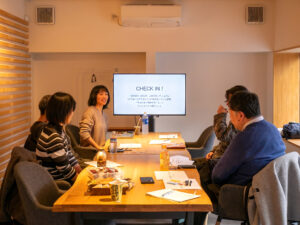
What Is the Significance of Education in Kusatsu?
At the start of the event, five people had gathered, including the staff member facilitating the discussion.
Among them were a mother raising three children in town, someone working hard to establish an open school, a university professor from the town’s volcano research institute, and a person who runs an online extracurricular program for elementary and junior high school students.
People involved in education from a wide range of perspectives came together.
We began by discussing the advantages and significance of raising and educating children in Kusatsu.
Participants read through the responses from the pre-event survey, sharing their thoughts while responding to and expanding on each other’s ideas.
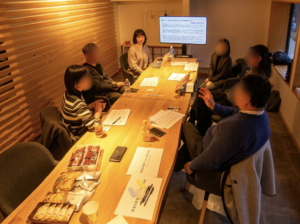
Overall, the ideas could be grouped into three main advantages:
“Abundant nature and hot springs,” “A town centered on tourism where children can see adults working up close,” and “Close-knit human relationships.”
The professor from the volcano research institute shared an example of a geology class given to local elementary school students and visiting high school students. Kusatsu’s active volcano and the remarkable balance that allows its energy to be released as hot springs instead of eruptions make it a unique place for this kind of fieldwork.
Everyone in the room became excited, saying they would love to take such a class themselves—even as adults.
Participants also agreed that the large number of international visitors and residents in the town provides opportunities to interact with people from diverse linguistic and cultural backgrounds.
Many participants also noted that the close-knit nature of the community means that people know each other well, creating an environment where the whole town watches over the children—a reassuring aspect of raising kids here.
At the same time, some pointed out that such close relationships can sometimes feel restrictive, and may make it harder for children to adapt when they later move to larger communities.
The Real Challenges Faced by Parents
Later in the discussion, three more participants joined us after work, and the group shared their experiences regarding the educational challenges in the town.
Those who are currently raising children spoke candidly about the realities they face, including concerns about their children’s education and the difficulty of balancing work and parenting.
• There is no early-morning bus, so parents must drive their children to the station down the mountain as early as 5:30 a.m.
• There are no cram schools in town, making it unclear where students can prepare for high school entrance exams.
• There are after-school childcare services, but they close early, forcing parents to leave work to pick up their children.
• Many school events assume parents will provide transportation, making it difficult to manage work schedules.
• There are few safe places where children can play on their own.
• The boarding houses for students attending high schools outside the town have closed.
The list of challenges seemed endless, and every issue raised was important and difficult to ignore.
Many participants were surprised to hear about situations they had not previously been aware of.
While the advantages of education in Kusatsu are appealing, there was a shared sense of urgency that these challenges must first be addressed.
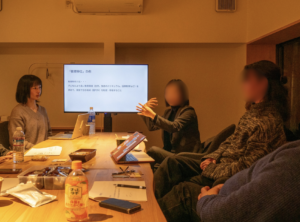
As someone shared their experiences, others listened attentively, reflected quietly, or asked questions to better understand.
The conversation flowed naturally, with speakers changing organically and discussion continuing without pause.
When perspectives differ, the world each person sees is different.
Even though everyone present was interested in education and actively involved in it, they discovered many experiences and perspectives they had never encountered before.
What everyone shared, however, was a single hope: that Kusatsu’s educational environment can improve, and that the town has the potential to make it happen.
Imagining the Future of Kusatsu
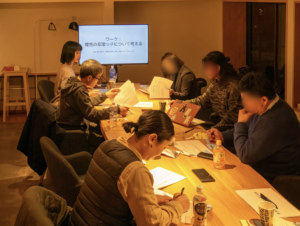
In the latter half of the event, participants worked together to organize the ideas that had been discussed so far.
• What kind of children would represent the ideal “Kusatsu kids”?
• What kinds of educational institutions or services would help nurture them?
• What challenges currently stand in the way of realizing this vision?
Participants wrote down every idea that came to mind on sticky notes.
While thinking, discussing, and organizing their thoughts, their hands never stopped moving.
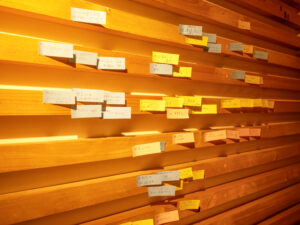
As participants finished writing, they began placing their notes on the wall, loosely grouping similar ideas together. The clusters of ideas gradually grew larger.
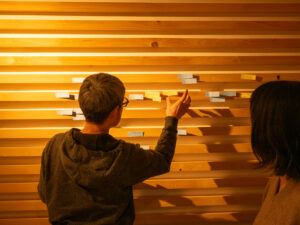
After many notes had been placed on the wall, everyone stepped back to look at the entire picture.
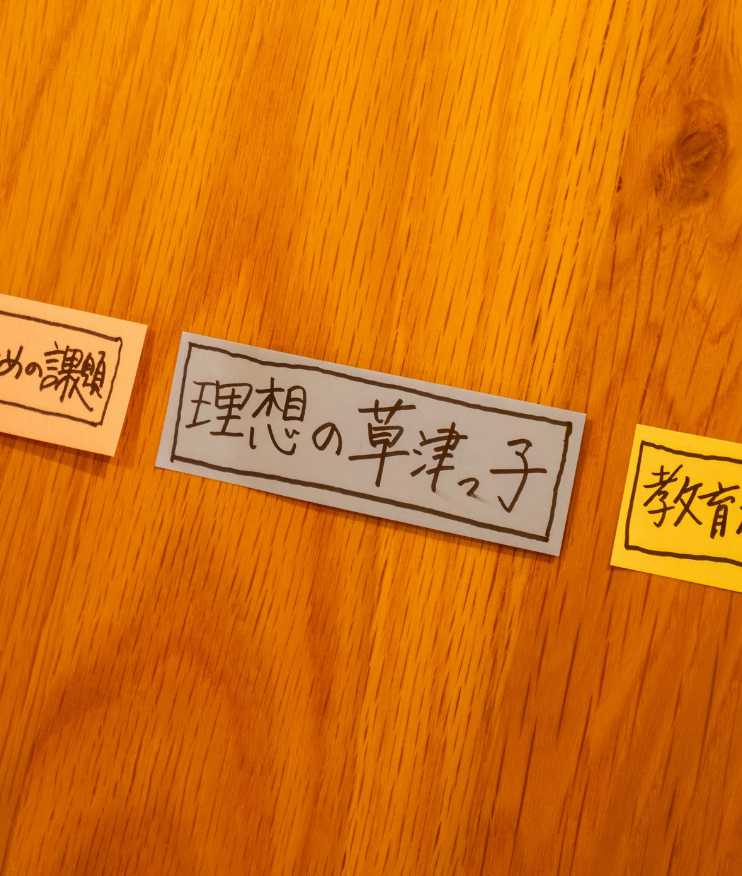
• Children who embody a spirit of hospitality
• Open-minded individuals who can accept people with different values
• Strong curiosity and a love of learning
• Making the town a leading city for disaster preparedness
• Trilingual education, with opportunities for children to study abroad
• Stronger family support systems
• A place where someone is always there—a place where people belong
• Deep knowledge of hot springs and nature, and pride in having grown up in the town
What emerged was a vision of an ideal Kusatsu—one that fully embraces the town’s potential.
There was a growing sense in the room: if these ideas could be realized, not only would the current challenges be addressed, but Kusatsu could become an even better town than it already is.
Participants began to feel a shared motivation to make these ideas a reality.
Reform of the Town, by the Residents, for the Residents
This event brought together residents to reflect on the broad theme of education in their town—sharing opinions, generating ideas, and proposing ways to address challenges.
Because the participants themselves are directly involved in parenting and education, they were able to share insights and feelings that only they could truly understand.
Their commitment to living in this town gave their perspectives both realism and seriousness, while their hope for the future created an atmosphere of excitement and intensity.
The three hours passed in what felt like no time at all.
We believe that the future of our town should be shaped by the people who live here.
The organizers also learned a great deal from having the opportunity to think together with residents who feel a strong sense of responsibility for their community.
We will carefully reflect on the ideas that emerged during this event and continue to explore ways the coworking space can contribute to improving education in the town.
Our goal is to begin addressing the town’s complex challenges from the perspective of education.
If Kusatsu becomes a town known for its attractive educational environment, more people will naturally gather here, and new residents may choose to move to the area.
We would be truly happy if the coworking space could serve as a starting point for that change.
We would like to sincerely thank everyone who participated in the event, as well as the many residents who shared their thoughts through the pre-event survey. Your valuable opinions meant a great deal to us.
All of the responses and the contents of this event have been compiled into a report and delivered to the town mayor.
We hope these discussions will help contribute to making Kusatsu an even better place.
Thank you for your continued support.
Share: 


Report
2026年2月18日
ReportReport: A Discussion on Education in Kusatsu
View more
![[Report] 1st Kusatsu Onsen Pizza-Making Experience Event](https://kusatsu.space/wp-content/uploads/2025/09/752a15667971c25ab3a3b553fc5a8e0c.png)
2025年9月16日
Report[Report] 1st Kusatsu Onsen Pizza-Making Experience Event
View more
![[Report] Kusatsu Onsen Art Winter — Christmas & Year-End Gathering](https://kusatsu.space/wp-content/uploads/2025/12/c63bd2102c5ead36690b85547d7893d4.png)
2025年12月16日
Report[Report] Kusatsu Onsen Art Winter — Christmas & Year-End Gathering
View more
![[Report] The first “Kusatsu Onsen Migrant Night” was successfully held](https://kusatsu.space/wp-content/uploads/2024/09/2024-0918-report-i.jpg)
2024年9月18日
Report[Report] The first “Kusatsu Onsen Migrant Night” was successfully held
View more

2025年8月30日
ReportReport: Participation in the 4th NETSUGEN Summer Festival @ Gunma Prefectural Office
View more
![[Report] Participation in the Shokosai Autumn – Yubatake Market 2025](https://kusatsu.space/wp-content/uploads/2025/10/a16020cebe9334e5f4910709e5480515.png)
2025年10月19日
Report[Report] Participation in the Shokosai Autumn – Yubatake Market 2025
View more